How to Take a 3-Month Camino Sabbatical

“How long will you be in Europe?” said the bored-looking customs agent in Iceland. It was not yet 7am,Reykjavik time, and he looked like he needed coffee as much as I did.

“Three months,” I answered. I’d found out (after I bought the plane tickets) that were pushing the limits of the 90-day automatic visa that Americans have in the Schengen Area, and I hoped he wouldn’t get too specific about when our return date was.

“We’re walking the Camino de Santiago across France and Spain,” I volunteered, hoping for distraction or support.

He looked at us — a respectable-looking married couple in sensible hiking shoes — and stamped our passports. “Welcome to the EU,” he said.

Last week there was a great essay in The New York Times about the importance of taking a sabbatical. Like us, the author was feeling burned out and without direction. Unlike us, she spent her time off at home.

It’s made me think a lot about how many people have asked about the practical aspects of my own three-month “pause.”

How did we take three months away from our regular lives, in our mid- (okay, late) thirties?

“I could never go away for so long,” I hear a lot.

My answer: you’d be surprised what you can do if you want it badly enough.

No two situations are alike, of course, and I’m not saying that what worked for me will work for someone else. But here, for what it’s worth, is a long look at how we took a three-month sabbatical to walk the Camino:

10838116_10152807801238557_8480614800741841606_o-e1421879566681


1. The Planning:

We planned this for a very, very long time. We knew in 2013 that we would walk the Camino in the Spring of 2015. The delay was partly because I wanted to go in the spring, before the crowds and heat descended. We had special events and commitments already scheduled in the spring of 2014, so 2015 it was.

We also needed some time to get our finances and plans together. We had some money in a savings account that we figured (correctly) would cover the expenses of the trip itself. It wasn’t a lot of money, but then again, the Camino is not an expensive trip. We stayed mostly in dortoir gites and albergues, relied on our own feet for transportation, took only two cab rides in 80 days, and always carried our own bags. We never scrimped on food (or drink), but we were in the countryside most of the time, so our options were simple and inexpensive.

All told, we spent less in three months than good friends spent on a ten-day Italian vacation.

However, that wasn’t also going to cover the “normal” expenses of life — from the astronomically expensive health insurance premiums to the apartment (and for me, office) rent, to the cell phone bills. We needed to give ourselves a year to make sure we had enough personal savings to also cover the cost of a life we weren’t living.

2. The Jobs:

This sounds like it should have been the complicated part of a three-month break, but really, it wasn’t.

I’m self employed, so how I use my time is up to me. But when I’m not working, I’m not making any money. (I really miss paid vacations and random bank holidays.) So for three months before we left, I worked seven days a week, racing to finish the plethora of projects on my desk.

In January 2015, I announced to my clients that I was closing myself to new projects, something I’d never done before. It was terrifying, not knowing if I was killing my reputation. If I was out of sight for six months, would anyone still be there when I got back? But it was a risk I was willing to take for this trip. (And when I came back, there were enough inquiries waiting for me that I picked up right where I’d left off.)

Eric has a more “normal” job, with an outside employer and a regular schedule. It’s a small nonprofit, which is great, because there aren’t a lot of arbitrary procedures or policies about employee leave. On the other, it means that every person there plays an important role, and that an absence would be felt across the organization. So a year before we left, Eric started talking to his boss and coworkers about what he was planning. He didn’t ask permission; this wasn’t really something that anyone could say “no” to. But he let them know that he valued his job and would like to come back at the end of the sabbatical (which we understood and accepted would be unpaid).

I wasn’t surprised when they agreed. He has a unique role with the team he works with, and over years has built a lot of trust and respect. He worked with them on a plan that adjusted for his absence and went back three days after we got home.
4154034755_567abde4da_z

3. The Home Front:

Let me start with the obvious: we don’t have kids, and so we have more freedom to pack up and jet off during the school year. (Although we did meet a few intrepid parents who were on the Camino with their babies/homeschooling kids…hats off to them.)

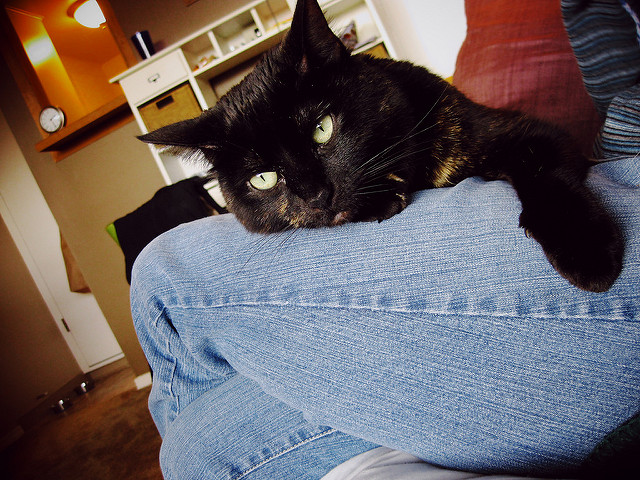
In 2015 we did have an old and cranky cat (still do), and an apartment, and a car, and a motorcycle. My initial plan was to save money by giving up the apartment (which I didn’t like very much back then anyway), putting our things in storage, and finding new digs when we got back. But that left me with the problem of the cat, who isn’t the type to easily integrate into someone else’s household. And when I did the math, the expenses of packing, storage, deposits on a new place, and temporary accommodation when we got back work out. It was cheaper and simpler to just pay for our apartment. And our landlord was happy to get three months’ rent in advance.

But that still left us without a cat plan. We were just a few weeks from departure, and I was really starting to worry, when the best possible answer fell into our laps, the way it’s wont to do.

My sister was recently out of college, underemployed, and spending most of her time on my parents’ couch. I figured if I was going to have an empty apartment, and she was going to sit on a couch, it may as well be mine. Surely Seattle had more opportunities for music majors than rural Maine. So after an epic cross-country road trip, she moved into our apartment and cat-sat while she tried out the Seattle job market. (My ulterior motives here worked out, and the temporary move became permanent.)

But since this was all coming together last minute, there was a window of time between our departure date and when she could arrive. Thankfully, a good friend (hi, Chris!) stepped in and kept an eye on things (and kept the cat company).

In the end, the real expenses of our sabbatical turned out to be keeping up everything at home. The only bill we could temporarily put aside was car insurance (we left both vehicles parked off the street. Of course, the car situation didn’t turn out the way we hoped, you may remember, but there was no way to predict that). We set everything up to auto pay and hoped for the best.

And other than that car crisis, the best is what we got.


Now that it seems like my feet are finally healing, we’re getting serious about planning the next Camino for this fall. It will be more like 5 weeks this time, not 3 months, but the same principles apply: plan ahead, communicate early, and hope that someone turns up who likes cranky old cats. 
The Via Podiensis (Le Puy Camino) Memoirs

It’s winter, it’s raining, and the world is a complicated, messy place. Sometimes the only solution is to turn it all off and curl up with a good book.

And when it comes to books about the Camino, your choices are plentiful. Amazon lists 60 memoirs with the key words Camino de Santiago, and that doesn’t begin to cover everything that’s out there.

Most of those books, though, cover the popular Camino Frances. What about the alternatives? What about the Via Podiensis, the route from Le Puy to Saint Jean Pied-de-Port? There are a lot of people on the American Pilgrims of the Camino Facebook Group talking about walking from Le Puy this year…what should they be reading?

Here are three of the best personal stories that most inspired me, both before and after my walk:

41glf8abwql-_sx326_bo1204203200_

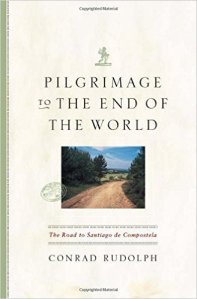
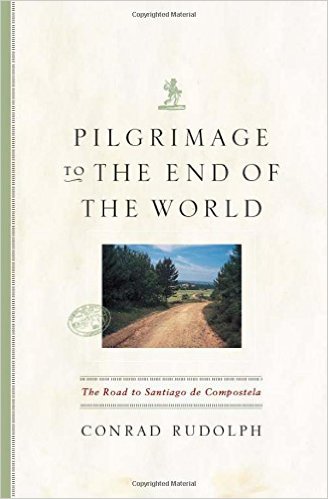
Pilgrimage to the End of the World by Conrad Rudolph

When I first heard about the Camino, I immediately went to my local library to find out more. Lucky for me, the first book that came up in my search was the thin volume by Rudolph, published way back in 2004. Why was it lucky? Because Rudolph walked from Le Puy to Santiago. Before I knew anything else about the Way, he rooted in my mind that this was a three-month, thousand mile journey. And I never looked back.


413uc8iyx4l

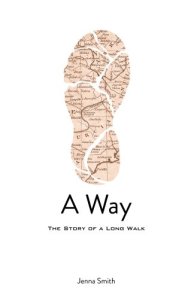
A Way: The Story of a Long Walk by Jenna Smith

I picked up this more contemporary perspective on both Via Podiensis (the Le Puy route) and the Camino Frances just a couple of weeks before I left for my own trip, and I was glad I did. Smith’s writing is both fun and informative, combining thoughtful insight with practical information I was dying to know (specifically: are there bathrooms?). Bonus: a recipe for aligot, the magical French dish of potatoes and cheese.


51fjdftfbdl

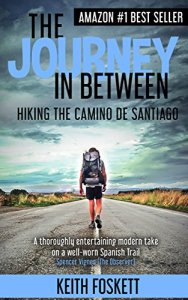
The Journey In Between by Keith Foskett

I didn’t find Foskett’s book until after I got home, which was too bad. His account of his journey is one of the most detailed I’ve found. He definitely walked his own Camino, with a lot more camping (and scoping the women) than I experienced, but reading his story was like re-visiting some of my favorite places, and would have been a valuable training tool.


Am I missing anything related to the Via Podiensis? I’m always looking for a new Camino story to read.

I’ll be back soon with a few of my favorite tales from the Camino Frances.


Disclaimer: The above links all go to Amazon.com, partly because some of these books aren’t widely available in bookstores, and partly because I have an associate account there. If you click the link and buy one of these resources, I will receive a few fractions of a cent. It’s a small way to pay the domain and hosting fees, and help make Camino Times Two self-sustaining. However,  if you have a preferred local bookseller who can order these titles for you, you should absolutely do that. 

How You Spend This Afternoon (An Almost Wordless Wednesday)


19775757799_7d12db2e72_z

From Annie Dillard’s Pilgrim at Tinker Creek:

“Thomas Merton wrote, ‘there is always a temptation to diddle around in the contemplative life, making itsy-bitsy statues.’

There is always an enormous temptation in all of life to diddle around making itsy-bitsy friends and meals and journeys for itsy-bitsy years on end. It is so self-conscious, so apparently moral, simply to step aside from the gaps where the creeks and winds pour down, saying, I never merited this grace, quite rightly, and then to sulk along the rest of your days on the edge of rage.

I won’t have it. The world is wilder than that in all directions, more dangerous and bitter, more extravagant and bright. We are making hay when we should be making whoopee; we are raising tomatoes when we should be raising Cain, or Lazarus.

Go up into the gaps. If you can find them; they shift and vanish too. Stalk the gaps. Squeak into a gap in the soil, turn, and unlock-more than a maple- a universe. This is how you spend this afternoon, and tomorrow morning, and tomorrow afternoon. Spend the afternoon. You can’t take it with you.”

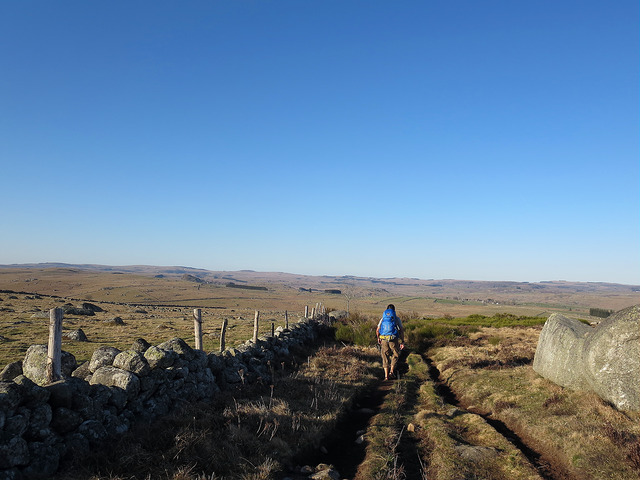
The photo is from the high plains of L’Aubrac, in the first week of our first Camino. This is how we spent the afternoons, and tomorrow mornings, and tomorrow afternoons. This is how we stalked the gaps.

Also, I think I figured out what book I want to bring with me on my next Camino. 


3 Camino Mantras for 2017, Part 3: Choose Your Focus


img_1763
Well, this time the camera chose the focus, and it wasn’t what I intended. But still, sheep!

The walk from Castet to Romieu was 30 kilometers (18 miles), a distance we’d walked before, but longer than I ever wanted to do in a day. We’d looked at the maps, though, and talked to our friends on the trail, and decided that a longer walk day while the weather was good was the best way to set ourselves up for the etapes (stages) of the Via Podiensis (the Le Puy route of the Camino) that would follow.

I spent much of the mid-day hours walking alone. Eric was somewhere ahead, well out of sight most of the time, moving at his own pace. This wasn’t unusual, but on that particular day, being alone with my thoughts was disastrous.

The Princesses were in full revolt (this was our second week in France, before I bought better shoes and walking poles). But more than that, that number thirty kept bouncing around my brain. Even thought I’d walked farther than that before, on that day it felt impossible.

How much farther do I have to go? I’ve be doing this for hours. I can’t do this! Why has everyone left me alone to do this? What if I get lost? Why is it so easy for everyone else? Why is this so hard? What if I fail?

With each step, my anxiety over what might happen ratcheted up.

I finally caught up to Eric, who stopped every hour or two to wait for me.  If memory serves, we still had about six or seven kilometers until we reached our destination, and I was a teary, sulky, miserable mess.

Eric was (frustratingly) calm and rational. He slowed down and walked with me, at my snail’s pace, and let me vent about how far away the destination still was, and about how far away Spain still was, and about how hard the Pyrenees would be. And then he said something that stuck with me

“You’re a lot more miserable when you let yourself think about all of the things that come next.”

Ouch. But he had a point.

“What if you stop thinking about the next ten miles, or ten days?” he continued. “What happens if you just think about right now?”

He was right, of course, and not just about how I felt that day in France. And so my third (and final) Camino mantra was born:

Mantra 3. Choose Your Focus.

I could waste time thinking about the things I could not control. Or I could pay attention to what’s right in front of me.

Being offline, outside, and in new settings for 79 days helped me change some of my patterns. It forced me to slow down and, at least more often, give my full attention to my surroundings.

After all, it’s easy for me to skate through a conversation in English with someone familiar. I can pay half attention to what they say, and also plan my response, or watch the other people in the room, or mentally write a grocery list. But trying to communicate with someone in a language I barely understand took my total concentration. If I looked away or let my mind wander for a second, I’d lose whatever thin thread I had to the unfamiliar syllables. Even if the conversation was in English, I learned, if I spoke without thinking about my own words, I risked slipping into slang, or talking at my “New Jersey speed,” or otherwise breaking that thread between us.

I had to focus on what was right in front of me. 

In 2016, back in the comfort and noise of home, I lost that focus. I let myself get caught in the unending, anxiety-fueled roller coaster of worrying about what might happen, and things that were far beyond my control, and I lost sight of the things right in front of me that could change. I spent hours on Twitter, watching hyper-emotional news and opinions unfold in real time. I fretted for months about personal conflicts over which I had no control. I prepared for arguments that never happened. And since that was an exhausting process, I also played a lot of mindless computer solitaire.

Looking back, it’s not a surprise that some of the creative projects I really wanted to do (like this book) didn’t happen. They got lost in the blurry corners of my distraction, which in the end didn’t change anything. Thinking about “the next ten miles, or ten days” only left the present untended.

So here’s my 2017 commitment to focus.

Focus on the present, and not on what might happen I’m (gradually) setting some boundaries between me and the streams of news, opinions, and distractions coming at me. It means creating new habits to limit the time I give to the things I can’t control (practice acceptance). It mostly means beating the twitch to check social media every five minutes to make sure I’m not missing anything. If the news cycle of the last 24 hours (while I tried to write this blog post, ironically) is any indication, the heightened emotional state of the world isn’t going away any time soon. I can wait for the summaries of the daily disasters.

Focus on what matters most. None of that means that I’m planning to disengage. I don’t like to talk about New Years resolutions (most of which are broken by now, anyway), but as the new year approached, I did set some priorities. Because if I want to do something good this year, I have to stop trying to do everything. I can’t invest deeply in every one of the world’s needs. I can’t write every book I want to write. I can’t explore all six countries on my “must see” list. I can’t be in three places at once. And so I’ve made some choices. I know what matters most to me, and if I’m going to invest in them, I’m going to have to let some other things slide.

I’m going to try to treat every day as if it’s a conversation with a person who only speaks French, in which I have to try to explain how Obamacare changed, but did not fix, the American healthcare system works.

(Yes, that really happened; it involved a lot of bad drawings on napkins.)

Except no, learning French still one of those things that has to slide.

Je suis désolé.


3 Camino Mantras for 2017, Part 2: Sometimes You Win, Sometimes You Lose

I spent a lot of time last week trying to sort through how to make 2017 into a better year than 2016. Not having an election is obviously a good start, but I’m looking for things that are a little more personal.

And my most meaningful, personal lessons came from the 79 days I spent walking the Way of Saint James, so that’s my reference.

On Friday I wrote about the first Camino mantra to make it into the new year: practice acceptance. The second, I think, is kind of an extension of that:


Mantra 2. Sometimes you win; sometimes you lose

This was Eric’s phrase, but we both started using it almost every day.

img_2354-web
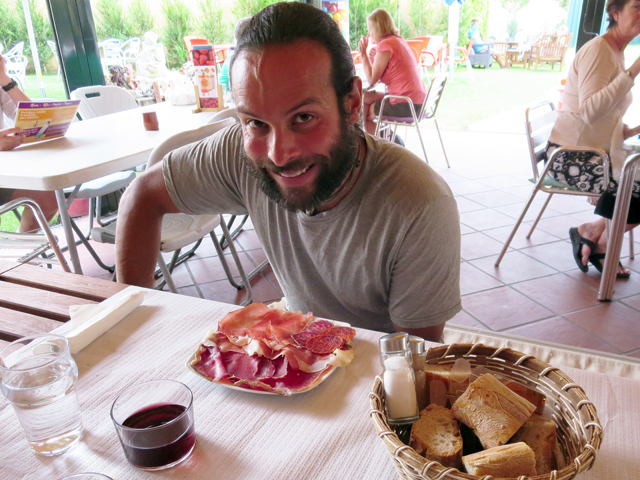
Win: when the menu del dia says only that the first course is carne, and then they bring each person a heaping appetizer tray of hams and sausages cured on the premises.

Sure, there was a basic rhythm to the Camino: walk, eat, sleep, repeat. But every day we arrived in a new place and slept in a different bed. The pattern was the same (check in, shower, wash clothes, buy supplies, journal, relax, dinner, sleep), but how well we did it varied. We might find ourselves in a private room with real sheets on the beds and real curtains on the windows, a spotless private bathroom just steps away. And then a few days later we’d be crowded onto flimsy metal bunkbeds that swayed every time either person moved, eight inches from strangers and two floors away from a moldy bathroom where the shower doors wouldn’t close. And somehow we’d paid the same amount for both places.

Eric would look at me and shrug. “Sometimes you lose…”

But we obviously didn’t always lose. Sometimes after a tense morning or steep section of trail we would stumble across a chapel in the middle of an anonymous village (or the middle of nowhere). Sometimes the obscure restaurant in the dusty, stiflingly hot, practically empty town served a gourmet four-course meal. Cutting a day’s walk short because of a blister once left us with a long afternoon in one of France’s most beautiful villages, in a hostel literally carved into the city’s stone walls, and with a Canadian host who helped us understand what kind of adventure we’d walked into.

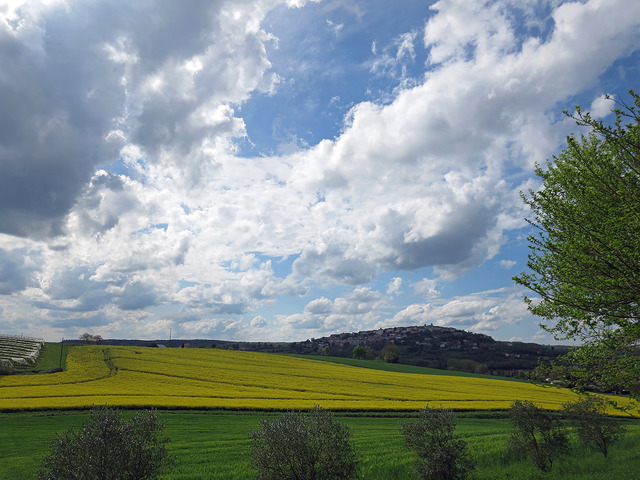
When we didn’t make reservations soon enough one busy weekend in France, we ended up in an inconvenient gite six kilometers from where we wanted to be in Lauzerte, which seemed like a “lose” until we arrived and discovered it was in a field of glowing safflowers, with a view of the medieval village on a hill rising in the distance. We ended up taking a much-needed rest day there.

20080891250_89b341efb4_z
Win: the lovely view from our “last choice” gite outside Lauzerte, which turned out to be the perfect place for a much-needed rest day.

Being the optimist, I would grin at my husband and his half-empty water bottle. “Sometimes you win.”

Eventually I started noticing the pattern…which is that there was no pattern. Things changed. The frustrating experiences always ended. We always moved on. Sometimes things got better. (Usually things got better.)

That, to me, was what our “sometimes” mantra really meant:

Assume that the next thing will be different.

So yes, in 2017 sometimes I’ll lose, and then I’ll practice acceptance. But no matter how bad today’s losses may seem, tomorrow still might be a win.

There’s no sense approaching the future with a sense of doom. (Yes, even after the election, I believe that.) There’s no reason to live as if everything will continue to get worse. And there’s no benefit to expecting to always lose. Bad service, a missed conversation, a setback? If you’re waiting for the loss, you may not appreciate the win.
Sometimes, really, in 2017 we’re going to win.

“Remember that tomorrow is a new day, with no mistakes in it yet,” said Anne of Green Gables.

And if you’re on the Camino, there might also be a castle.

Three Camino Mantras to Carry into 2017, Part 1: Practice Acceptance

In 2015, I walked a thousand miles across two countries, a couple of mountain ranges, and a few hills that felt like mountains. I shared meals, rooms, and stories with people from every continent except Antarctica. I learned how to count in French, and hand wash my pants in a sink, and what it’s like to sleep in a 900-year-old house (the plumbing is limited and far away, but it’s totally worth it).

In 2016, by contrast, I spent a lot of time staring at a laptop screen, watching things fall apart.

Sound familiar? I suspect a lot of us rang out the year last week feeling a little shell shocked by how many things (both personal and global) went terribly wrong last year.

But I don’t want to talk about 2016. It was such a rough year for so many people that calling it a Dumpster fire has become cliché.

Instead, I’m going to think about what’s next.

I’m pulling out the mantras that drove me over the Pyrenees, from Le Puy to Finnesterre, and thinking about how to live them better in 2017.

This is likely to get long, so I’ll break it into three parts.

20509497884_3f7c379123_z
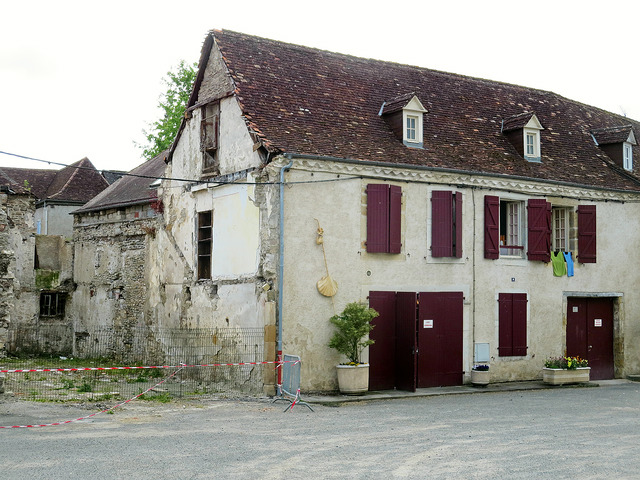
The “overflow” gite in Navarrenx. After more than 30 days in small, clean, well-appointed places, this crumbling mess was an unpleasant surprise.

Mantra 1. Practice acceptance.

I tend to approach the world as if everything is negotiable, everything happens for good reasons, and the people who are kind and fair will be rewarded. I can probably blame four decades of reading novels with happy endings for that.

Of course, real life doesn’t always work out like a novel. I know that, in theory. But when things don’t seem fair or even logical, more often than not I still fall apart.

Fortunately (no, really), I’m married to a pessimist who sees no reason to think that anything will be logical or fair. It’s become Eric’s unfortunate duty to remind me, over and over, that some things just won’t be what I want them to be, and no amount of whining or complaining will change that.

The municipal gite will overbook, and we’ll be sent off to a moldy, crumbling overflow building. It will keep raining, even after both our trousers and our pants are soaked through. I will have to climb another hill when my body is sure we should be there by now. People will snore, and turn on overhead lights before dawn, and pack all of their belongings in the noisiest, most crinkly plastic bags they can find. Surly Spanish waitresses will refuse to serve us. Every French cafe and market will be closed on a Tuesday for no apparent reason.

Practice acceptance, Eric would warn me when I would get that “are you kidding me?” look, or (more embarrassingly) my eyes would fill with tears. And sometimes I would. More often, I would growl at him and keep sulking.

Eventually, though, I would usually have to acknowledge that he was right.

Sometimes I just have to accept what is, rather than what should be, and adjust myself, rather than the immovable situation in front of me.

It might rain, but I can choose to laugh and splash through a puddle or two. It’s not like I can get any wetter. That hill still needs to be climbed, but I can focus on the next ten steps, rather than the whole impossible thing. I can smile at the snorers, knowing they’re not doing it on purpose. (The people with the crinkly bags? Yeah, I’m still working on accepting that.) I can remember that the waitress had probably served a few hundred clumsy, noisy pilgrims already this week, before I threw her yet another request in butchered Spanish. My once-in-a-lifetime experience is her day-to-day grind. And the French markets? Well, banging on the doors doesn’t help (trust me on this), so we may as well keep walking. Someone probably has an apple or some sausage in their bag.

Practicing acceptance became a daily exercise on the Camino, as important as stretching my calves at the end of the day.

And now, for the sake of the Camino, there are things for me to start accepting in 2017 for what they are, rather than what they should be.

My now-chronically injured feet, for one.

Yep, even at home the Princesses continue to rule my life. Last spring, when I tried to ease back into a running routine, I developed first plantar fasciitis, then heel spurs and chronic Achilles inflammation, and now tendonitis (in the OTHER FOOT!). Plus, there’s a floating bone fragment that the doctor says will probably continue to irritate my feet forever.

I spent a lot of 2016 trying to actively ignore the problem, believing the whole situation would get better on its own. After all, I walked across two countries! How could a little jogging and basic exercise leave me so broken?

But ignoring it didn’t work, and I’ve started to accept that I’m at that age where things start falling apart without regular care and maintenance. I’ve given up running (at least for now), and obediently wear a walking cast for a few days when I overdo the walking. I donated my five bags of cheap shoes (I have a thrift store habit) and spent an insane amount on sensible orthopedic footwear. (Shout out to PowerStep inserts, which are slowly helping me walk again.)

I’ve also accepted that the Camino Norte trip we’d tentatively planned for spring will have to be put off until at least the fall. And that’s okay. Because we’ve seen Spain in the spring, but never in the golden hues of harvest.

Hmm, maybe things happen for good reasons after all.

Opportunities (Almost Wordless Wednesday)

19774173528_cf12097544_z

“We are so attached to our way of life that we turn down wonderful opportunities simply because don’t know what to do.”

          – Paulo Coehlo

I almost didn’t go on the Camino. The fears almost beat me a dozen times, and they succeeded in delaying me for years. I didn’t know how to pack, how to travel in another country, how to speak another language. I couldn’t imagine sleeping in a room full of people, or how my cat would survive at home without me.

But eventually, the need to go was stronger than the gravity that kept me in place. And when it was time, I figured out what to do. And it was, indeed, wonderful.

What opportunities are calling you in 2017? Where will your own arrows point you?


The Pyrenees Crossing in 3 Minutes (Video)


Before I walked my first Camino, when I looked at the whole trip spread out before me, there was one part that scared me more than any other: the day I would walk over the Pyrenees.

I’ve written about my own walk from St Jean Pied-de-Port to Roncevalles before. Every pilgrim who’s done it talks about it. We share war stories first in the cafes and albergues along the way, and later in our books, our blogs, and our local APOC gatherings.  There’s nothing else on the Camino Frances that’s quite like the 1400 meter climb into the wilderness, far from any town of cafe con leche, surrounded only by grazing animals (and the line of fellow pilgrims).

But what is it REALLY like?

Thanks to YouTube and moreventure, we can relive it (or preview it) step by step:

Plus, the speed!

As the year draws to a close, this is what I feel like. The pressure of the holidays (shopping! parties! decorating! baking! travel!), plus the pressure of owning a small business and figuring out all of the end of year accounting, plus the lingering head cold…it’s all got me feeling a little “hyperspeed.”

But still. There was this one day I walked over the Pyrenees. How hard can Christmas week really be?


Hugging Saint James (The Traditions of the Camino)

There’s a lot to do when a Camino pilgrim reaches Santiago de Compostela.

You have to find the Pilgrim’s Office, stand in line, and get your Compostela.

You have to find a place to stay.

You have to find all your friends and take group pictures.

You have to go to a pilgrim’s mass at the Santiago de Compostela Cathedral and hope that it’s a day they’re swinging the botafumeiro.

21973007634_53d148f082_z
Waiting for the pilgrim’s mass in the Cathedral of Santiago de Compostela

We did all of that, of course, and more, in the one long day we spent in the city of Saint James. And there are a dozen other things that we missed, like the cathedral roof tour or the pilgrim meal at the Parador.

(Side note: The Confraternity of Saint James just published a booklet about what to do in Santiago. I’m picking up a copy before my next trip.)

But the tradition that meant the most to me was the one I didn’t even know was a tradition until we got there.

You get to hug Saint James himself.

(Well, a shiny replica of him, at least.)

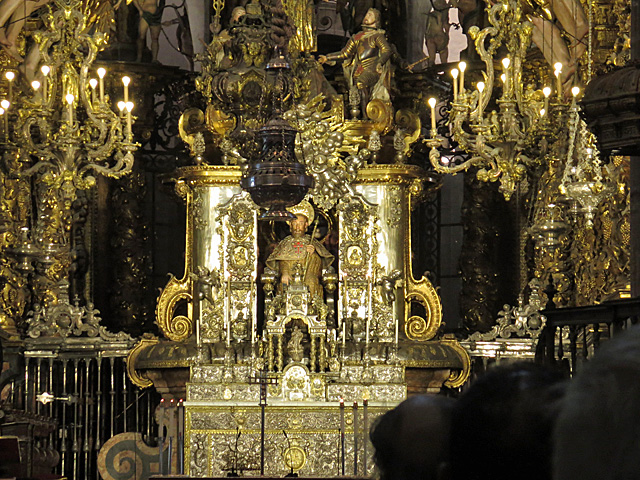
The Santiago de Compostela Cathedral is a Romanesque masterpiece, built between 1060 and 1211. But inside, the baroque gold-lovers went a little nuts. Standing tall in the high altar is, not surprisingly, a life-sized, gaudy, jewel-and-gold-encrusted statue of Saint James. (It’s hard to visit a Spanish cathedral and not think about how Ferdinand and Isabella conquered the New World and killed a lot of people to get all of that gold from the New World, but let’s not dwell there.)

img_2700
There’s a lot going on here…

But behind that statue is a camarín, or small room, accessed by a set of stairs. And that pilgrims of the Camino are encouraged to climb those stairs, approach the statue of Christ’s disciple, offer their thanks for a safe journey…and hug him.

The stairway to the saint is open any time the cathedral is open, and the line can stretch for hours. So there are a steady stream of faces peeking out through the bright lights and shiny gold, even during the masses and services of the church. I first noticed them just an hour after we’d arrived in the city, while we waited in crowded pews for the pilgrim mass to start. Every now and then, just for a second, a pair of arms appear out of the dark shadows and wrap about the neck of Saint James.

22582226932_928da15a4a_z
See that guy hovering behind St. James? He’s about to reach around and give him a squeeze.

Oh, this was something I HAD to do.

Eric was…more hesitant. But because he loves me, he tolerates my occasional dive into the whimsical.

The long wait mid-day was too much even for me, but we came back in the evening, after the masses had all ended and most of the crowds had dispersed to find beds and dinner. The short line moved quickly, with a volunteer to make sure no one lingered too long. We climbed the narrow stairs – me giddy and bouncing, and Eric embarrassed, hanging back.

There was a man in front of me in line who was…well, he was a big guy. And when he tried to reach around the golden shoulders, I saw him bump the gilded staff…and it jangled as if it was loose.

The pilgrim in front of me almost broke Saint James!

But no, everything was all right. And then it was my turn. I was still giggling as I leaned into the bright altar spotlights and reached out. But then I had a moment, one of those rare I am present, right now, and this will never happen again. And I totally leaned in and laid my face on the shiny gold and said gracias.

Thank you for a thousand miles we traveled without serious injury.

Thank you for the millions of people who have trekked this way before me.

Thank you for the story you left behind.

Thank you for letting me be a part of it.


Eric may still disagree, but I thought it was a lovely, personal moment with the guy at the center of the story.

Why I Turned Off My Cell Phone on the Camino

I admit it: I have the twitch:

The instinctive urge to reach for the phone every time there’s a pause in life: waiting in line, or before a show or movie starts, or on the bus…or when there’s just a break in conversation. Am I missing something? What are other people doing?

The desire to take a picture and share it, immediately, so that other people know what I’m doing, and what they’re missing.

Is life real if it’s not documented?

The twitch has been particularly painful for the past few weeks, as everything is rather, well, emotional. I thought the weeks leading up to the election were bad; the weeks since have been even worse.

And yet I still click.

All of this has me thinking about how, last year, I broke the habit. When we left for our Camino, we decided to turn off all of our electronic devices. We would offer no live updates from the trail, no Instagram filters, no email, no streaming music. We would skip the Google maps and apps. I carried a camera, but those pictures stayed locked away until I got home. I took them only for myself. (Well, and eventually for you all, but back then I didn’t know that this blog thing would happen.)

18949912703_22a8d11937_z
Why would I need GPS when I have this guy to show me the way?

It was an easy decision for me, because I was walking the Camino in part to break away from the gadgets.

Here’s how I describe it in the book in progress:

Somehow, life had stopped feeling real.

I didn’t know how to explain this in English, let alone French, but the relentless day-to-day demands of postmodern adult life had burned me to a crisp. It didn’t feel like I was really living anymore, as much as I was trying to keep up with all of the beeping and buzzing machines that demanded my attention.

There was a year when Eric and I had intentionally lived without Wi-Fi, but that time was long past. My life was controlled by my screens. As an editor and writer, my work happens on a laptop. As a self-employed editor and writer, trying to pay half the rent in one of the most expensive cities in the country, that work takes a lot of hours. Plus there were the friends, family, and colleagues scattered all over the country, sharing their photos and news. I had four separate email inboxes to check daily, each one full of people who wanted my attention. My Google calendar was a rainbow of appointments, commitments, deadlines, and tasks, all overlapping.

I checked my smart phone constantly. Some days I couldn’t get from my apartment to my car without checking Facebook. What if I was missing something?

What I was missing was a life that felt real.

The Camino, with its thousand years of history, felt real.

I wanted to be present on the Camino in a way that I knew I couldn’t be if I had a pocket full of distractions. If I was constantly thinking about faraway people, I reasoned, I would lose precious moments with the ones who were with me.

That turned out to be true, and going offline for our three-month Camino was one of the best decisions I made. Not only did it give me the gift of presence, it taught me a few other, sometimes unexpected things.

Sometimes it’s good to ask for help.

Not having a phone wasn’t just a way to focus on the people around us; sometimes it was the impetus to meet the people around us.

Everything I’d read about the Camino before we left said that that we didn’t need to make reservations to stay in pilgrim albergues. In fact, I was reassured that most albergues didn’t even accept reservations. And this turned out to be true…in Spain. But first, we walked across France.

A tip for anyone who walks the Chemin du Puy, from Le Puy to St. Jean Pied-de-Port. The French LOVE reservations. French gites, which are generally smaller and more personal than Spanish albergues, and often include home-cooked dinners, fill quickly, even in the off season.

While you CAN walk without a réserve, you will quickly learn the word complé. And so we learned to fit into the flow of pilgrims, who gather every evening to discuss where to go the next day. There are guide books and maps in multiple languages, and lovely French arguments about how far is too far, and then, eventually, the phones come out, and everyone calls their gite of choice.

20274367281_1a297bc1de_z
An afternoon spent planning our next etape. There are guide books in at least three languages on that table.

Except if you don’t have a phone (or if you suspect that, even if you did make an exception and pull out your phone, no one would understand your mangled French, anyway) it puts you in a place to ask, s’il vous plaît, if someone will call for you.

And someone always did. They would chatter in French and make a reservation for deux Américains. (We rarely had a reservation by name. We were the only Americans on that particular section of the Way, that early in the year, and everyone we met seemed to already know who we were…)

Neither Eric nor I are the type to normally ask for help; we’re usually the ones giving it. So receiving this kindness, day after day, and leaving the critical detail of where we would sleep in the hands of others, was a powerful lesson in itself.

Compromises must be made.

Okay, now I have to confess: our offline Camino wasn’t entirely offline.

Even before we left, we made two accommodations to the “no devices” rule: first, we borrowed a friend’s GPS Spot. When we remembered to turn it on, it automatically sent signals to a website, where anyone who wanted to know where we were/if we were okay could see our little blinking dot moving (slowly) across the map.

20260186472_eb48bc6036_z
Eric and Spot, the little orange GPS tracker

And second, we created the “secret email.” We’re long-time T-Mobile customers, and our plan actually includes free international data. So although we both turned off our regular email accounts — and all of the accompanying work messages, mass emails, and distractions — we also set up a brand-new Gmail address that only three people knew about: two friends from home who met us for short portions of the Camino (so that we could coordinate meetings), and my sister, who was our house sitter and designated point person for emergencies. We checked the secret email account every three or four days, just in case.

There were a few other compromises. We used the Kindle apps when we ran out of paper books (about two weeks into a thirteen-week trip). We researched travel details when the Camino ended (yes, it’s possible to take a train from Santiago all the way to eastern France, but it’s a little complicated).

But in three months, there were no emergencies (or if there were, the people at home were able to handle them just fine without us). Not hearing about every dramatic/traumatic world event  gave me time to process the events that happened right in front of me.

Which helped me understand…

I’m not indispensable.

Yes, I know. People lived for centuries without immediate access to distant loved ones. Medieval pilgrims left home for years, and no one knew if they were alive or dead. It’s not really that dramatic to slip partially off the grid for three months, in a first world country.

But it’s one thing to know that, and another thing to live that.

I still have the twitch, but it’s easier now to put the phone away, or turn it off for a day or even a whole weekend, and trust that the world will keep turning even if I’m not watching it.


Bottom line: if you want it to be, the Camino is a great time to “beat the twitch.” It’s a personal decision, and I’m not suggesting that everyone should turn off their electronic devices. The first rule of the Camino is to walk your own Camino.

But if you’re feeling the pressure, try it. The arrows will guide you. (And so will these books.)

21126734878_1843593513_z